 Gutter Clean
 Before
  After
After Spokane, WA — Licensed & Insured
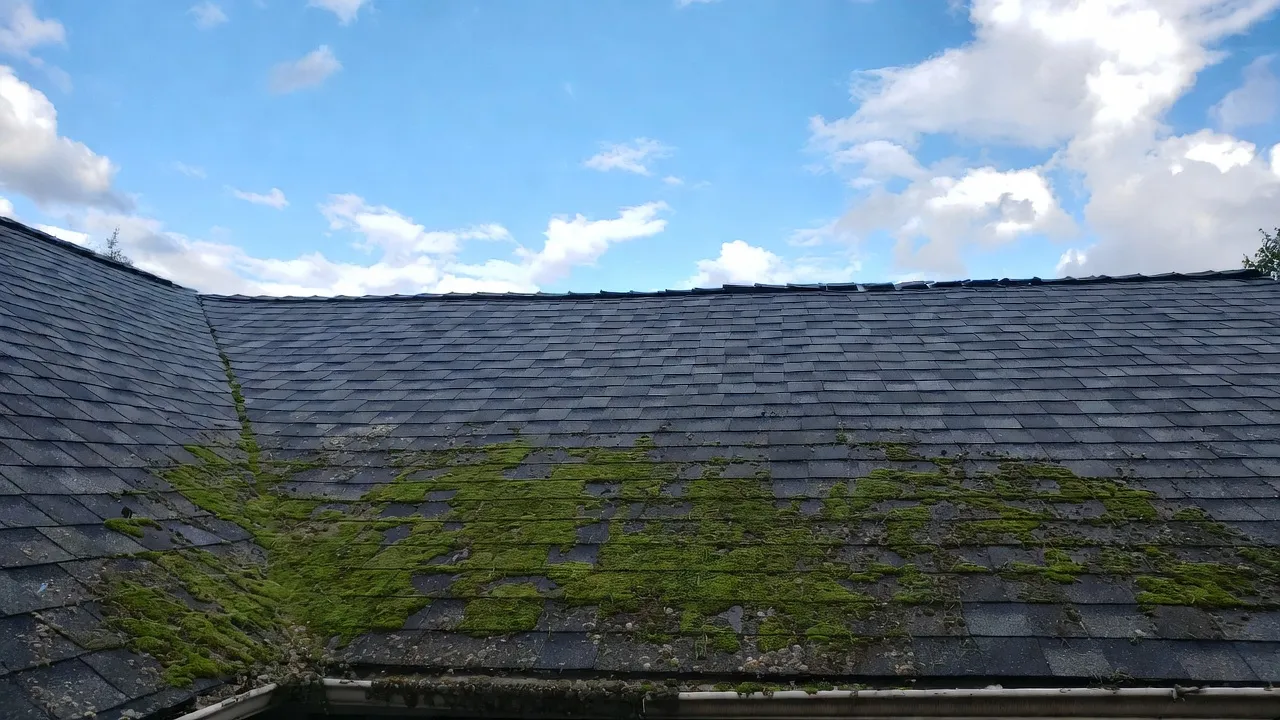
Moss and algae eat away at your shingles, trap moisture against the roof deck, and shorten the life of your roof. We clean Spokane roofs the right way — low-pressure soft-wash that removes growth without damaging the shingles underneath. Free estimates, guaranteed results.
Call Now
509 267 6458
Open today · Mon–Sat 9am–5pm
Get a Free Roof Cleaning Estimate
No obligation · Response within 1 business day
The problem
Spokane is one of the worst cities in the Pacific Northwest for roof moss, and the reasons come down to climate, geography, and tree cover. If you have lived here for more than a few years, you have almost certainly seen it — green patches spreading across north-facing slopes, black streaks running down the shingles, and thick moss mats taking hold in shaded areas.
Spokane receives roughly 16 to 17 inches of precipitation per year, but the problem is not total volume — it is duration. From October through May, the region experiences long stretches of overcast, damp weather with very little direct sunlight to dry things out. Roofs stay wet for days or weeks at a time. Moss thrives in exactly these conditions: consistent moisture above 40 degrees with limited evaporation.
In the northern hemisphere, north-facing roof slopes receive the least direct sunlight year-round. In Spokane, where winter sunlight is already limited, a north-facing roof plane may get no meaningful sun exposure for five or six months. That persistent shade keeps the surface damp, and moss colonises those areas first. Many Spokane homes show moss growth on the north side while the south side remains completely clean.
Spokane's mature neighbourhoods — South Hill, Five Mile, parts of the Valley — are defined by large Douglas fir, western red cedar, and pine trees. Those trees drop needles and leaves onto rooftops, which collect in the valleys and create organic compost that moss roots into. The canopy itself blocks sunlight and slows evaporation, creating a microclimate on your roof that is even wetter than the surrounding air. Homes in heavily treed areas often need roof cleaning every year or two rather than every three.
What moss does
Moss is not just a cosmetic issue. Left untreated, it will shorten the life of your roof by years and can lead to leaks, wood rot, and expensive repairs. Here is what happens when moss takes hold.
Asphalt shingles are coated with ceramic granules that protect the underlying asphalt from UV radiation. Moss grows between and under those granules, pushing them loose. As granules fall away, the raw asphalt is exposed to the sun, which dries it out and makes it brittle. You will often see granule loss in gutters and downspouts below a mossy roof — that is your roof literally wearing away.
A thick moss mat acts like a sponge. It absorbs rainwater and holds it against the roof surface long after the sky has cleared. That constant moisture works its way under shingles, through the underlayment, and eventually into the roof deck. Once the plywood or OSB deck starts to rot, the problem has moved from cosmetic to structural. Roof deck replacement means a full tear-off, which is one of the most expensive home repairs a Spokane homeowner can face.
As moss grows, it pushes up the leading edges of shingles. Lifted shingles create gaps where wind-driven rain can enter. In winter, those gaps allow melting snow to flow underneath and refreeze at night, which makes the lifting worse and accelerates damage. Moss also expands when it freezes, prying shingles apart further with each freeze-thaw cycle. This is exactly the kind of damage that compounds over a Spokane winter and results in springtime leaks.
Moss that breaks loose from the roof surface washes into gutters and downspouts, where it packs into dense mats that block drainage completely. Clogged gutters then overflow, dumping water along the foundation. So roof moss does not just damage the roof — it creates a chain reaction that affects your gutters, siding, and foundation. Keeping the roof clean is one of the most effective ways to protect the entire exterior system of your home.
Our method
We clean roofs using a soft-wash method, which means professional-grade cleaning solutions applied at low pressure — roughly the output of a garden hose. There is no high-pressure wand, no blasting, and no risk of stripping shingle granules. The cleaning solution does the work, not the water pressure.
Pressure washing is the wrong tool for roof cleaning. The high-pressure stream strips granules from asphalt shingles, cracks and displaces tiles, and forces water under flashing and into the underlayment. Every major shingle manufacturer — GAF, Owens Corning, CertainTeed — explicitly warns against pressure washing and will void warranties if it is detected. Despite this, many companies still use pressure washers because it is faster for them. It is faster because it damages the roof surface. We will not do that.
We apply a specially formulated cleaning solution that kills moss, algae, lichen, and the root systems they use to attach to your shingles. The solution is allowed to dwell on the surface — usually 15 to 30 minutes depending on the severity of growth — during which time the organic matter loosens and dies. We then rinse the roof with low-pressure water, washing away the dead material without disturbing the shingle surface. The result is a clean roof with its protective granule layer fully intact.
Before we start, we cover all landscaping, garden beds, deck furniture, and walkways around the perimeter of your home with protective tarps. We pre-wet all vegetation to dilute any cleaning solution that contacts it. After the cleaning and rinse are complete, we collect any moss or debris that has come off the roof and leave the property exactly as we found it. If moss has washed into your gutters during the process, we can clean those out as well so your whole system starts fresh.
Maintenance
The right cleaning schedule depends on your home's specific exposure. In Spokane, most roofs need cleaning every two to three years, but some need it annually.
Factors that accelerate moss growth include north-facing roof planes, heavy tree canopy overhead, proximity to greenbelts or wooded areas, and low-pitch roofs that drain slowly. If your home has two or more of these factors, annual cleaning is a worthwhile investment. For more exposed homes with good sun, every three years is typically sufficient. We will evaluate your roof during the estimate visit and recommend a schedule.
Our work
Moss removal results from Spokane homes. The soft-wash method removes years of growth without damaging shingles.
Before After Before After Before After See more of our work on the project gallery page.
“Our north-facing roof was covered in thick moss — you could barely see the shingles. They used the soft-wash method and it came out looking like new. No damage to the shingles at all. I was worried about pressure washing but they explained exactly why they do not use it. Very professional.”
“Had three large pines overhanging our roof and years of moss buildup. They killed everything, let it release, and washed it clean. The difference is incredible. They also cleaned out the gutters that were packed with moss debris. Will definitely have them back every couple years.”
“We were told by another company we needed a new roof because of the moss damage. Gutter Clean came out, cleaned it, and showed us the shingles were still in good shape underneath. Saved us thousands. Honest, thorough, and they left the yard spotless.”
Roof cleaning in Spokane typically ranges from $350 to $700 for a standard single-family home, depending on the roof size, pitch, and severity of moss growth. Smaller roofs and light algae treatments are on the lower end. Heavily moss-covered roofs with steep pitches may run higher. We provide free estimates so you know the exact cost before any work begins.
Yes, when done correctly. We use a soft-wash method that applies a professional-grade cleaning solution at low pressure — roughly the same pressure as a garden hose. This dissolves moss and algae without blasting off the protective granules on your shingles. High-pressure washing is the method that damages shingles, and we do not use it on roofs.
Most Spokane homeowners benefit from a roof cleaning every two to three years. If your home has heavy tree canopy, sits on a north-facing slope, or is in a shaded neighbourhood like parts of South Hill or Five Mile, you may need annual cleaning. We will inspect your roof and recommend a schedule based on its specific conditions.
Pressure washing forces high-pressure water against asphalt shingles, which strips away the granule coating that protects the underlying asphalt from UV radiation. Once those granules are gone, shingles degrade rapidly and the roof needs premature replacement. Pressure washing can also force water under shingles and into the underlayment, causing leaks. Soft washing achieves the same clean results without any of this damage.
Soft-wash cleaning removes all visible moss and algae and treats the surface to slow regrowth. In Spokane's climate, moss will eventually return because the environmental conditions — moisture, shade, and organic debris — are still present. A zinc or copper ridge strip can provide longer-term prevention. Most homeowners find that cleaning every two to three years keeps moss under control effectively.
Yes. We cover all landscaping, decks, and walkways around the perimeter of your home before we start. After the cleaning, we collect any moss or debris that has come off the roof and leave the property clean. We also clean gutters of any material that washes down during the process if you need it.
More questions? See the full FAQ page or call us directly.
Gutter Cleaning
Regular cleaning prevents clogs and water damage
Gutter Repair
Fix sagging gutters, leaking joints, and fascia damage
Gutter Installation
Seamless aluminium gutter replacement
Gutter Guards
Reduce debris and extend gutter system life
Ice Dam Removal
Emergency winter service for ice dam damage
Commercial Gutters
Scheduled maintenance for commercial properties
We clean roofs across Spokane and the surrounding Inland Northwest. Here are some of the areas we serve most frequently.
View all 25 service areas →Free estimate · Response within 1 business day · Licensed & insured